
Spinal Cord Stimulation
- Home
- Spinal Cord Stimulation
Spinal Cord Stimulation for Chronic Nerve Pain in Singapore
Medically reviewed by Dr Christopher Liu, MBBS (Hons), MMed (Anaes), FAMS (Anaes) · Last reviewed 25 Oct 2026
Spinal cord stimulation (SCS) is a treatment for long-standing nerve pain. A thin lead placed near the spinal cord delivers mild electrical pulses that change how pain signals reach the brain. It is usually considered when medication and other treatments have not controlled the pain well enough.
At Alleviate Pain Clinic in Singapore, Dr Christopher Liu performs both the trial and the permanent implant himself, so you stay under the care of one doctor from assessment to follow-up.
At a glance
- What it is: thin leads placed in the epidural space, connected to a small battery (pulse generator) under the skin
- Used for: chronic nerve pain that has not improved enough with medication or other procedures
- Trial: usually about 5 days, with temporary leads, before deciding on a permanent implant
- Implant: usually done with an overnight stay
- Reversible: the leads and battery can be removed
Who may benefit from spinal cord stimulation
SCS may be considered if you have nerve pain in the back, legs or arms that has lasted for months and has not settled with other treatment. It is commonly used for:
- persistent pain after spine surgery (also called failed back surgery syndrome)
- complex regional pain syndrome
- painful diabetic neuropathy
- chronic nerve pain in the arm or leg, including pain from a pinched or injured nerve
Before suggesting SCS, Dr Liu will review your scans and treatment history, and check that simpler options such as medication or epidural steroid injections have been considered. SCS may not suit you if you have an active infection, a bleeding problem, or cannot stop blood-thinning medicines. Dr Liu will go through this with you.
How spinal cord stimulation works
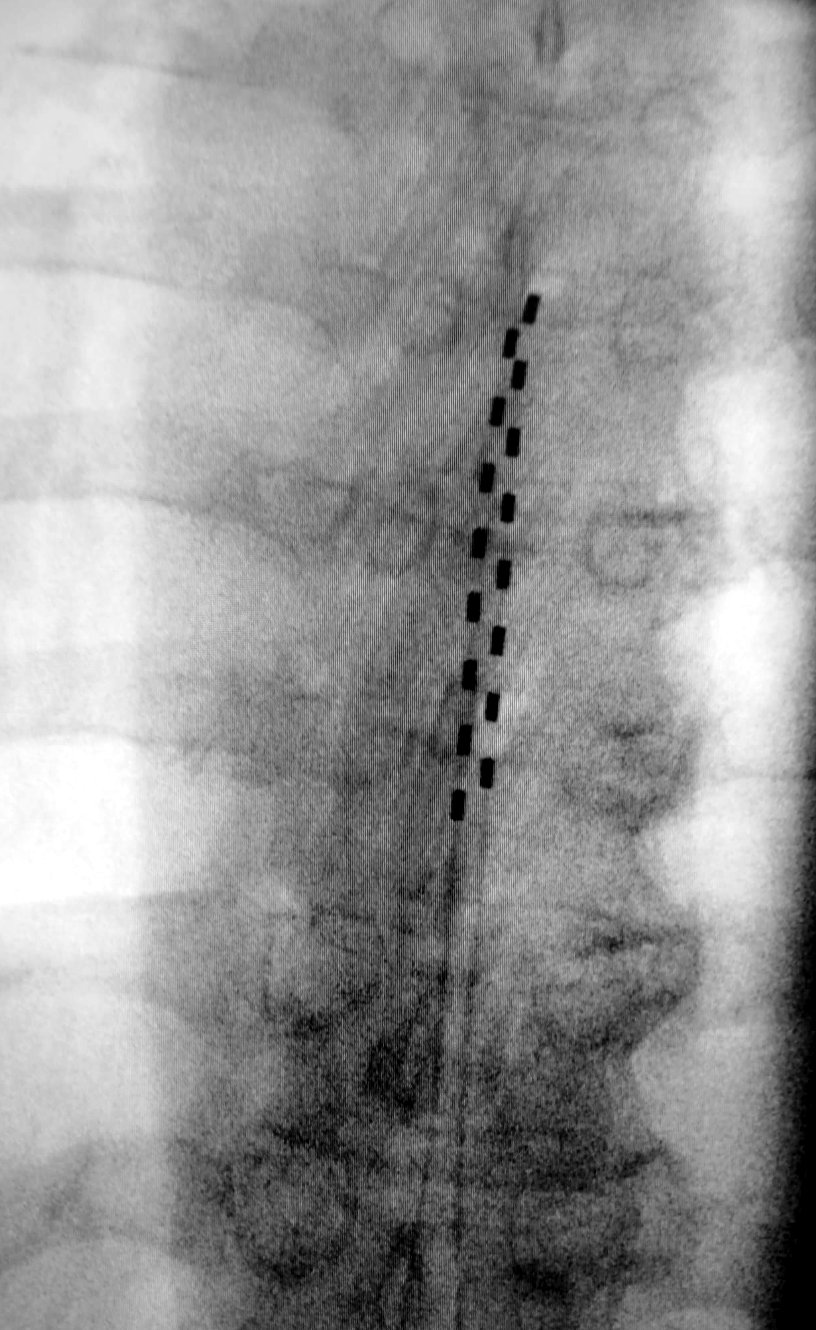
The leads sit in the epidural space, just outside the spinal canal, and are connected to a battery that you control with a handheld remote. The electrical pulses change the pain signals travelling along the spinal cord. Some people feel a gentle tingling over the painful area, and others feel nothing at all, depending on the settings used. Your settings can be adjusted over time.
What to expect: trial first, then implant
- Consultation. Dr Liu examines you, reviews your scans, and explains whether SCS is likely to suit you.
- Trial (usually about 5 days). Temporary leads are placed and connected to an external device. You use it at home, so you can see how it affects your pain, sleep and daily activities.
- Review. You and Dr Liu go through the results of the trial together and decide whether to go ahead.
- Permanent implant (usually with an overnight stay). The leads are secured and a small battery is placed under the skin, usually near the buttock or abdomen.
- Programming and follow-up. Your settings are adjusted, and you are given instructions on wound care and on activities to avoid while the leads settle.
If the trial does not help, the temporary leads are removed and nothing stays in your body. You decide at each stage whether to continue.
Possible risks
Risks include infection, bleeding, lead movement, discomfort at the battery site and, rarely, nerve injury or headache from a dural puncture. The device may occasionally need adjusting, repositioning or removal. Dr Liu will go through these risks with you in detail before any procedure.
Frequently asked questions
What is spinal cord stimulation used for?
Spinal cord stimulation is used for chronic nerve pain that has not improved enough with medication or other treatments. Common reasons include persistent pain after spine surgery, complex regional pain syndrome, painful diabetic neuropathy and long-standing nerve pain in the arm or leg.
How long is a spinal cord stimulation trial?
The trial usually lasts about 5 days. Temporary leads are connected to an external device, and you use it at home to see how it affects your pain and daily activities before deciding on a permanent implant.
Do I need to stay in hospital for the implant?
The permanent implant is usually done with an overnight stay. Dr Liu will explain what to expect before and after the procedure.
Is spinal cord stimulation a cure for nerve pain?
No. It aims to reduce pain and help you do more in daily life. Results differ from person to person, which is why a trial is done first.
Can the spinal cord stimulator be removed?
Yes. The leads and battery can be removed if you no longer want the device or it is not helping.
Can I have an MRI scan with a spinal cord stimulator?
Some systems allow MRI scans under set conditions. Dr Liu will tell you what applies to your device.
Do I need a referral to see a pain specialist?
No. You can book a consultation directly. If you have recent scans or medical reports, please bring them along.

Go To Top
Chat with us