

Musculoskeletal pain

De Quervain’s tenosynovitis in Singapore: symptoms, tests and treatment

Pain on the thumb side of the wrist, especially when gripping, pinching or lifting, is often De Quervain’s tenosynovitis. It usually responds well to treatment without surgery. A pain specialist can confirm the cause and plan treatment with you.

At a glance

Common signsPain and swelling on the thumb side of the wrist, worse with gripping, pinching or turning the wrist.
See a specialist ifWrist pain has lasted more than a few weeks, keeps coming back, or is limiting your work, childcare or phone use.
What may helpActivity changes, a thumb splint, pain relief and, if needed, a steroid injection.
Seek urgent care forA hot, red, swollen wrist with fever, or wrist pain after a fall with deformity or inability to move the wrist or thumb.
Written and reviewed by Dr Christopher Liu, Pain PhysicianLast reviewed: 27 October 2026About Dr Liu

What is De Quervain’s tenosynovitis?

De Quervain’s tenosynovitis is irritation and thickening of the covering (sheath) of two tendons that move the thumb, the abductor pollicis longus and extensor pollicis brevis. These tendons run together through a narrow tunnel on the thumb side of the wrist. When they swell, they rub against the tunnel, which causes pain when you move your thumb or wrist.1

It is more common in women and most often affects people in their forties and fifties. It is also common in new mothers.1

What causes it?

There is often no single cause. It tends to build up with repeated strain on the thumb and wrist. Contributing factors include:

  • repetitive thumb and wrist movements, such as typing, texting, gaming, knitting or manual work
  • repeatedly lifting and carrying a baby, which is why it is common in new mothers
  • pregnancy and the months after delivery
  • a previous injury to the wrist or thumb
  • inflammatory conditions such as rheumatoid arthritis

Symptoms

Typical features include:

  • pain on the thumb side of the wrist, sometimes spreading to the thumb or up the forearm
  • tenderness and sometimes swelling over the tendons at the base of the thumb
  • pain when gripping, pinching, lifting or turning the wrist, for example wringing a cloth or turning a key
  • a feeling of catching or stiffness when moving the thumb
  • occasionally tingling or numbness along the back of the thumb

Seek urgent medical care if you have wrist pain with:

  • a hot, red, swollen wrist, especially with fever or feeling unwell
  • severe pain, swelling or deformity after a fall or injury
  • inability to move your wrist or thumb

Go to the nearest emergency department.

When should you see a pain specialist?

Consider an assessment if:

  • pain on the thumb side of the wrist has lasted more than a few weeks or keeps coming back
  • it is interfering with your work, childcare, phone or computer use, or sleep
  • rest and a splint have not given you enough relief
  • you are not sure what is causing the pain, as other problems such as arthritis at the base of the thumb can feel similar

How is it diagnosed?

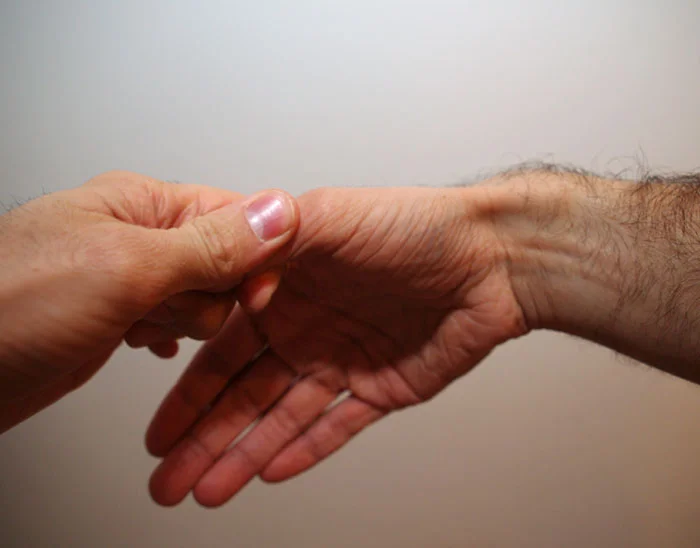
Diagnosis is usually made from your history and an examination. Dr Liu will check for tenderness over the tendons on the thumb side of the wrist and may do Finkelstein’s test. In this test you tuck your thumb into your palm and bend your wrist towards the little finger side. Sharp pain on the thumb side of the wrist points to De Quervain’s tenosynovitis.1

Scans are usually not needed. An X-ray or ultrasound may be used if the diagnosis is unclear or to rule out other causes, such as arthritis at the base of the thumb or a fracture.

Photo of two hands: the examiner’s hand holds the patient’s thumb while the patient’s wrist is bent towards the little finger, the position used in Finkelstein’s test
Finkelstein’s test: the examiner holds the thumb and gently bends the wrist towards the little finger. Pain over the thumb side of the wrist suggests De Quervain’s tenosynovitis. Photo: PhilippN, CC BY-SA 3.0, via Wikimedia Commons. Converted to WebP.

How is it treated?

Many people improve with simple measures, and a steroid injection is an effective option if pain continues.

  • Rest and activity changes. Reduce repetitive pinching and gripping where you can, and change the way you lift and carry, for example supporting a baby with your whole palm and forearm instead of the thumb.
  • A thumb splint. A removable splint that holds the thumb and wrist at rest gives the tendons a chance to settle.
  • Pain relief. Anti-inflammatory gels or tablets may help, used as advised by your doctor.1
  • Steroid injection. A small amount of steroid, with local anaesthetic, is injected into the tendon sheath to reduce inflammation. Many people get good relief from one or two injections.1 In a 2023 review of treatments, an injection followed by a thumb splint for 3 to 4 weeks gave the best results for pain and hand function.2 We use ultrasound to guide the needle, so that the medicine is placed accurately.
  • Hand exercises. Once the pain has settled, gentle stretching and strengthening help you return to your usual activities.

If pain persists or comes back after non-surgical treatment, a short operation to open the tunnel is a reliable option.1

What to expect at your visit

At your consultation, Dr Liu will ask about your symptoms, your work, hobbies and daily activities, and examine your wrist and thumb. He will explain what he finds, discuss whether any tests would help, and go through your treatment options, including their benefits, limits and risks, so that you can decide what suits you.

You do not have to put up with wrist pain. Many people improve with the right treatment, and our aim is to ease your pain so that you can get back to lifting, typing and the things you enjoy. Book a consultation and we will work out a plan with you.

Looking after your wrist

  • Wear your splint as advised, and remove it for washing and gentle exercises if your doctor says so.
  • Take regular breaks from typing, texting or gaming, and try voice-to-text for long messages.
  • Keep your thumb relaxed when you grip, and avoid holding your thumb stretched out for long periods.
  • Lift with the whole hand. Support a baby or a heavy object with your palm and forearm instead of the thumb.
  • Use warmth on a stiff wrist, and do your exercises regularly in short, frequent sessions.
Dr Christopher Liu, pain physician at Alleviate Pain Clinic

Dr Christopher Liu, Pain Physician

MOH accredited Pain Specialist and Medical Director of Alleviate Pain Clinic at Farrer Park Hospital. He completed an interventional pain fellowship at the University Health Network in Toronto and was previously a Senior Consultant in Pain Medicine at Singapore General Hospital.

Read more about Dr Liu

References

  1. Satteson E, Tannan SC. De Quervain tenosynovitis. In: StatPearls. Treasure Island (FL): StatPearls Publishing; updated 2023. ncbi.nlm.nih.gov/books/NBK442005
  2. Challoumas D, Ramasubbu R, Rooney E, et al. Management of de Quervain tenosynovitis: a systematic review and network meta-analysis. JAMA Network Open. 2023;6(10):e2337001. doi:10.1001/jamanetworkopen.2023.37001

This page gives general information and is not a substitute for medical advice. Please see a doctor about your own symptoms and treatment options.

Common questions

What is the difference between De Quervain’s and carpal tunnel syndrome?

De Quervain’s tenosynovitis causes pain on the thumb side of the wrist that is worse with gripping and thumb movement. Carpal tunnel syndrome is pressure on the median nerve and typically causes tingling and numbness in the thumb, index and middle fingers, often at night. They can look alike, so an examination helps tell them apart.

Will De Quervain’s go away on its own?

It can settle with rest, a splint and avoiding the movements that aggravate it, especially when it is caught early or is related to pregnancy and caring for a baby. If the pain continues, treatment can ease it and help you get back to your usual activities.

What does a steroid injection for De Quervain’s involve?

A small amount of steroid and local anaesthetic is placed into the tendon sheath on the thumb side of the wrist. It takes a few minutes in the clinic, and we use ultrasound to guide the needle. Some soreness for a day or two is common. Uncommon effects include lightening or thinning of the skin at the injection site. Dr Liu will explain the risks and what to expect.

How long do I need to wear a splint?

A thumb splint is usually worn for around 3 to 4 weeks, often after an injection, and can be removed for washing and gentle exercises. Follow the advice you are given for your own situation.

Will I need surgery for De Quervain’s?

Most people do not. Surgery to open the tendon tunnel is considered if symptoms persist or return after non-surgical treatment, including injections.

Does insurance cover interventional pain treatments in Singapore?

Interventional pain procedures are covered by the Ministry of Health's Table of Surgical Procedures (TOSP). They are therefore reimbursable by all Integrated Shield Plans and most corporate insurance plans. However, it is advisable to obtain preauthorisation from your insurer before the procedure. Our clinic staff will guide you through this process.

Ready to talk about your pain?

Book a consultation, or call us on 8655 5722.
Go To Top