Welcome to Chiropractor of Losangle !

Advanced pain treatments

Nucleoplasty and Annuloplasty for Disc Pain in Singapore

Low back pain can originate from the intervertebral discs. Annuloplasty and Nucleoplasty are minimally invasive procedures, performed under sedation, that can help to address pain arising from the disc.

Written and reviewed by Dr Christopher Liu, Pain PhysicianLast reviewed: 27 October 2026About Dr Liu

What is nucleoplasty?

Nucleoplasty is a minimally invasive procedure designed to treat pain caused by a contained (bulging) disc. It’s a type of percutaneous discectomy that reduces pressure inside the disc, which in turn relieves pressure on the nearby spinal nerves. The primary goal of Nucleoplasty is to alleviate radiating leg pain (sciatica) or arm pain caused by a mildly herniated disc that has not responded to conservative treatments.

How is nucleoplasty performed?

The procedure is performed under sedation, with a local anaesthetic to numb the area. Using imaging guidance, a needle is directed into the centre of the bulging disc.

Once the needle is positioned, a small radiofrequency device is inserted. It gently dissolves a tiny amount of disc tissue to relieve the internal pressure. The device is then removed and a small bandage is applied, with the entire process typically lasting less than an hour.
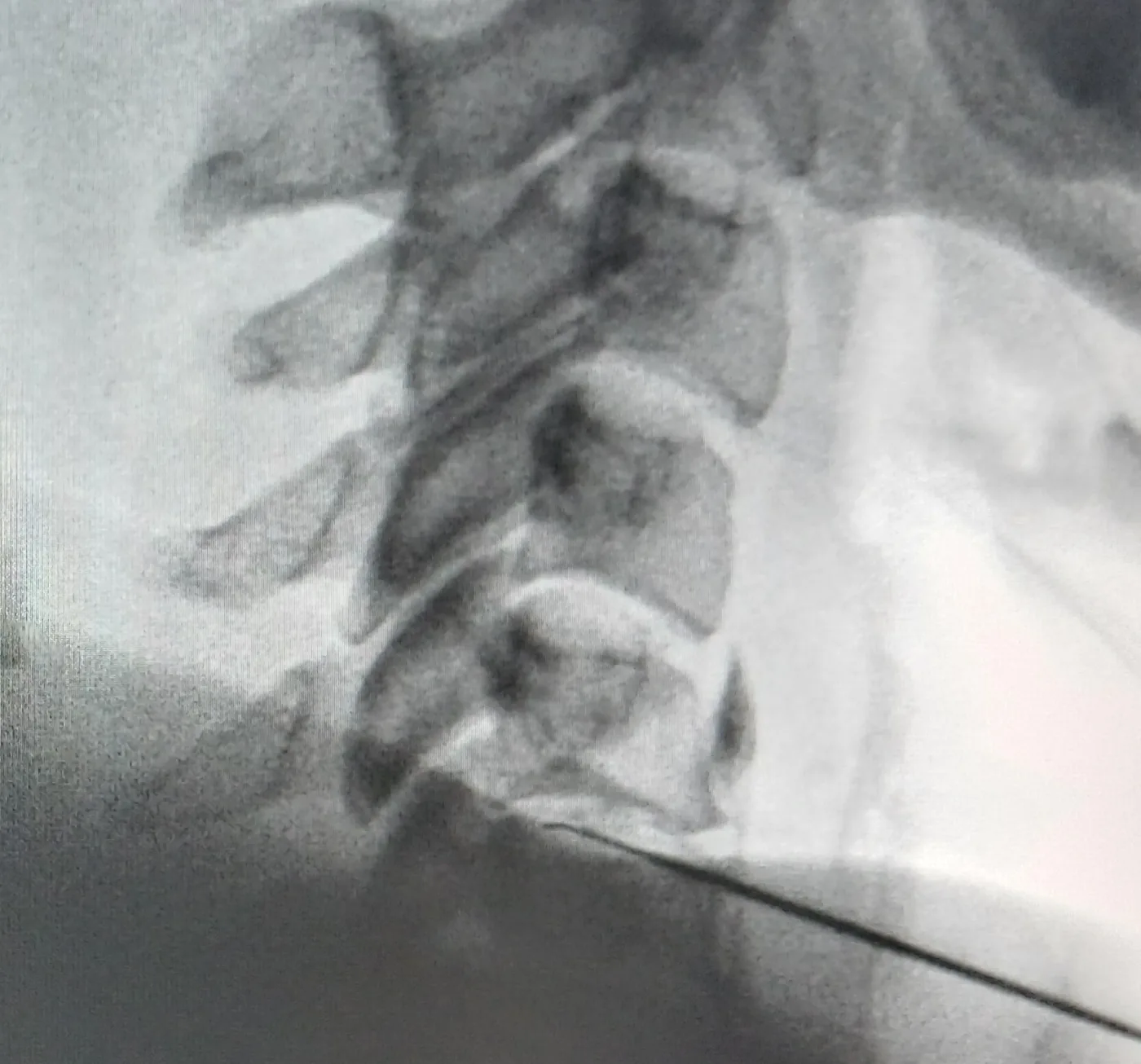
X-ray image of the neck from the side, with a needle guided towards a cervical disc during nucleoplasty
Fluoroscopy (X-ray) image during cervical nucleoplasty. The needle is guided towards the disc.

Who is a good candidate for nucleoplasty?

Nucleoplasty may be suitable for individuals who meet the following criteria:

  • Have a contained disc bulge (a mild or ‘protruding’ disc where the outer wall is intact).
  • Experience radiating nerve pain, such as sciatica in the leg or similar pain down the arm.
  • Have not found sufficient relief from conservative care, including physiotherapy and medication.
  • Have had a thorough diagnosis (including an MRI) to confirm their specific disc condition is suitable.

To learn more about the conditions these procedures treat, see our pages on disc herniation, back pain and neck pain. For another injection treatment for disc-related nerve pain, see epidural steroid injections.
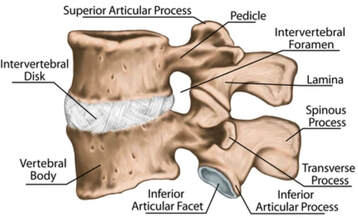
Overview of Back Pain
Side view of two lumbar vertebrae, showing the intervertebral disc between the vertebral bodies.

What is annuloplasty?

Annuloplasty means “repair of the annulus”, the tough outer wall of the spinal disc. The term refers to procedures that treat the annulus, where irritated nerve endings can be a source of chronic back pain (discogenic pain).

How is annuloplasty performed?

Annuloplasty is a minimally invasive outpatient procedure performed under local anaesthesia and sedation. Using X-ray guidance, needles are placed at the outer wall of the affected disc. Thermal energy is then delivered through the needles to heat the disc wall, which is intended to desensitise the painful nerve endings and reduce chronic back pain.

Who is a good candidate for annuloplasty?

Annuloplasty may be suitable for patients who have:

  • Chronic, disc-related back pain (discogenic pain) that has lasted for more than six months.
  • Annular tears shown on an MRI. A diagnostic test such as a discography may be used to confirm the painful disc when the MRI findings are not clear.
  • No significant disc herniation or loss of disc height.
  • Failed to find relief from comprehensive conservative treatments like physiotherapy and medication.

Our pain specialist can assess your condition and advise whether annuloplasty is a suitable option for you.


Annuloplasty is a minimally invasive procedure where special needles
 are inserted into the discs. These needles can produce heat 
which help to denervate the discs. This procedure is performed by a 
pain specialist in the operating room and under sedation.
X-ray (fluoroscopy) image during annuloplasty, with needles positioned at the outer wall of the disc.

Nucleoplasty vs annuloplasty: key differences

Aspects Nucleoplasty Annuloplasty
Primary GoalDecompress the disc from the insideReduce pain from the disc’s outer wall
Target AreaThe soft nucleus at the disc’s centreThe tough annulus (outer wall)
MechanismRemoves a small amount of tissueHeat to desensitise nerve endings

What to expect after the procedure

Nucleoplasty and annuloplasty are performed under sedation, so you should arrange for someone to accompany you home. You may have some soreness at the treatment site for a few days, and your pain may temporarily increase before it improves. We will tell you when you can return to your usual activities and exercise.

Possible risks include bleeding, infection and irritation of a nearby nerve. These are uncommon, and we will go through them with you in clinic before the procedure.

How well do these procedures work?

Both procedures work best when the disc is the true source of the pain and the patient has been carefully selected.

For nucleoplasty, a randomised trial in patients with a contained lumbar disc herniation causing leg pain found greater relief of leg pain and better function than repeated epidural steroid injections over two years. Overall, the evidence for nucleoplasty is described as limited to fair, as most studies are small, so we recommend it for selected patients.

For annuloplasty, a randomised, sham-controlled trial of a radiofrequency disc procedure found improvements in pain, physical function and disability six months after the procedure in people with chronic low back pain from the disc. Results vary between individuals, and we will discuss realistic expectations with you.

Dr Christopher Liu, pain physician at Alleviate Pain Clinic

Dr Christopher Liu, Pain Physician

MOH accredited Pain Specialist and Medical Director of Alleviate Pain Clinic at Farrer Park Hospital. He completed an interventional pain fellowship at the University Health Network in Toronto and was previously a Senior Consultant in Pain Medicine at Singapore General Hospital.

Read more about Dr Liu

References

  1. Gerszten PC, Smuck M, Rathmell JP, et al. Plasma disc decompression compared with fluoroscopy-guided transforaminal epidural steroid injections for symptomatic contained lumbar disc herniation: a prospective, randomized, controlled trial. J Neurosurg Spine. 2010;12(4):357–371. doi:10.3171/2009.10.SPINE09208
  2. Manchikanti L, Falco FJE, Benyamin RM, Kaye AD, Boswell MV, Hirsch JA. An update of the systematic assessment of mechanical lumbar disc decompression with nucleoplasty. Pain Physician. 2013;16(2 Suppl):SE25–SE54.
  3. Kapural L, Vrooman B, Sarwar S, et al. A randomized, placebo-controlled trial of transdiscal radiofrequency, biacuplasty for treatment of discogenic lower back pain. Pain Med. 2013;14(3):362–373. PMID 23279658

This page gives general information and is not a substitute for medical advice. Please see a doctor about your own symptoms and treatment options.

Common questions

What is the difference between nucleoplasty and annuloplasty?

Nucleoplasty reduces pressure inside a bulging disc, while annuloplasty treats pain arising from the outer wall of the disc. Both are minimally invasive and do not require major surgery.

Is nucleoplasty a painful procedure?

Nucleoplasty is done under sedation with a local anaesthetic, so you should be comfortable during treatment. Some mild soreness afterwards is normal and usually settles within a few days.

How much does nucleoplasty cost in Singapore?

The cost of nucleoplasty in Singapore depends on factors such as the complexity of your disc condition and the type of anaesthesia used. Contact our clinic for a detailed breakdown.

Do I need a referral to see a pain specialist for annuloplasty or nucleoplasty?

A referral is not always required. You can contact our pain clinic in Singapore directly to arrange a consultation for annuloplasty or nucleoplasty.

Can annuloplasty and nucleoplasty be done together?

In some cases, both procedures may be recommended depending on the type and extent of disc damage. Our pain specialist will advise based on your diagnosis.

If you believe you may have an annular tear or suffer from chronic low back pain, schedule an appointment with the specialists at Alleviate Pain Clinic, located at Farrer Park Hospital, Singapore. Our Doctors can provide a comprehensive evaluation and tailor a treatment plan to help you manage and overcome your pain effectively.

Does insurance cover interventional pain treatments in Singapore?

Interventional pain procedures are covered by the Ministry of Health’s Table of Surgical Procedures (TOSP). They are therefore reimbursable by all Integrated Shield Plans and most corporate insurance plans. However, it is advisable to obtain preauthorisation from your insurer before the procedure. Our clinic staff will guide you through this process.

Ready to talk about your pain?

Book a consultation, or call us on 8655 5722.
Go To Top