

Advanced pain treatments

Facet Joint Denervation (Radiofrequency Ablation) for Neck and Back Pain in Singapore

Facet Joint Denervation, also known as Medial Branch Radiofrequency Ablation (RFA), is a minimally invasive procedure that provides long-term relief from chronic back and neck pain secondary to facet joint arthritis or facet joint dysfunction from whiplash.

Written and reviewed by Dr Christopher Liu, Pain PhysicianLast reviewed: 27 October 2026About Dr Liu

What is facet joint denervation?

Facet joint denervation is a procedure that uses radiofrequency energy to treat pain originating from the facet joints, the small joints at the back of the spine. A specialised needle is guided to the medial branch nerves that carry pain signals from the affected facet joint. Radiofrequency energy is then passed through the needle, creating a gentle heat that makes a small lesion on the nerve. This interrupts the pain signals, so they no longer reach the brain.

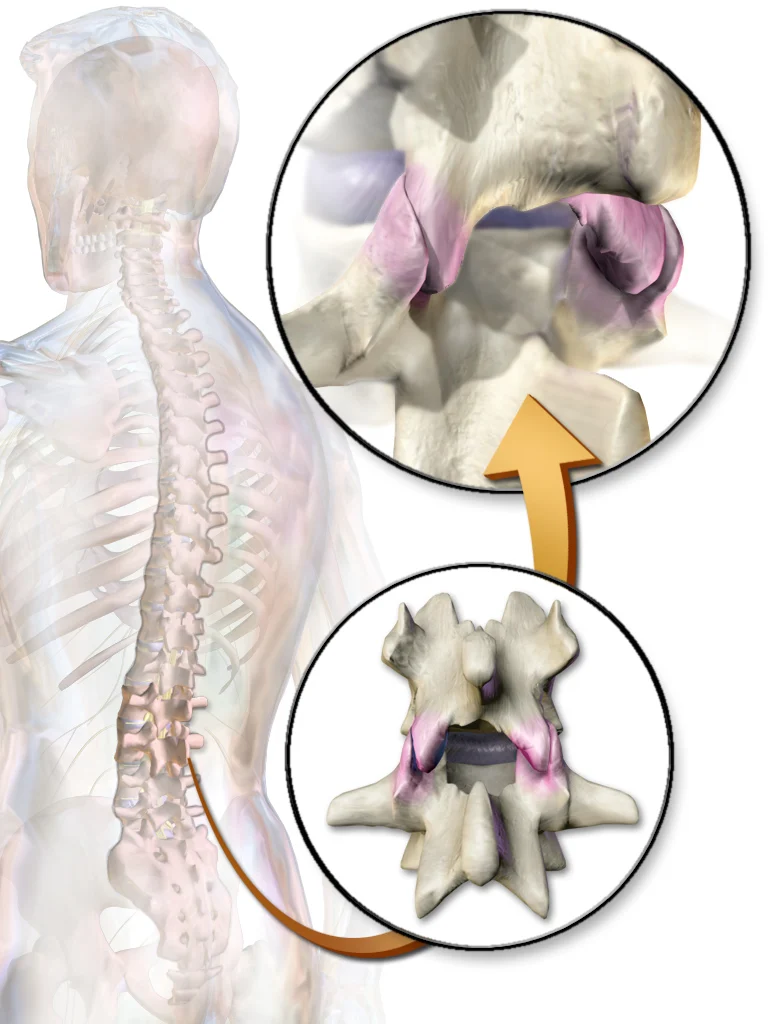
Illustration of the spine showing the facet joints, the small paired joints at the back of each vertebra, magnified
The facet joints are the small paired joints at the back of each vertebra, shown here in the lower spine.
Image: BruceBlaus / Blausen Medical, CC BY 3.0, via Wikimedia Commons

Who is it for?

Facet joint denervation is for patients with neck or back pain that is likely due to the facet joints, for example from arthritis of the spine or from a whiplash injury. We assess your pain through your history and examination. A diagnostic medial branch block may be done first to confirm the source of your pain, particularly when it is less clear that the facet joints are the cause. For more on back pain and its causes, see our pain conditions pages.

What to expect

Facet joint denervation is usually done as a day surgical procedure, so you go home on the same day. It is done under fluoroscopy (live X-ray) guidance, which allows the needle to be placed precisely next to the medial branch nerves. The nerves are then treated with radiofrequency energy.

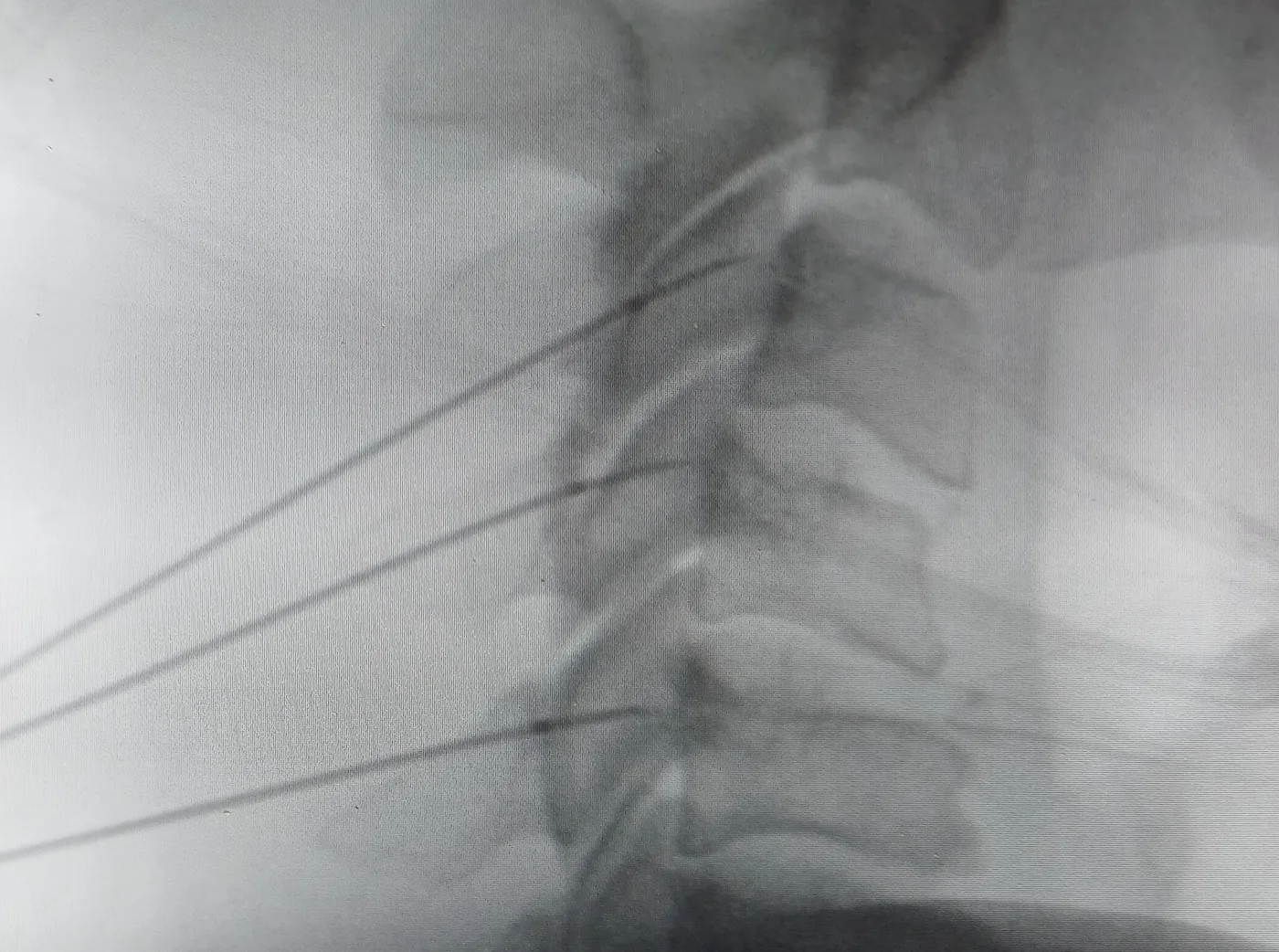
X-ray image of the neck from the side, with needles positioned beside the cervical facet joints during radiofrequency ablation
Fluoroscopy (X-ray) image during cervical facet joint radiofrequency ablation. The needles lie beside the facet joints.

You may have some soreness or bruising at the treatment site for a few days. The restrictions on your activity after the procedure are minimal, and we will tell you when you can return to your usual activities.

How well does it work?

Relief usually lasts 12 months or longer. The nerves slowly regrow over time, and when the pain returns, the procedure can be repeated. Repeat procedures tend to give a similar length of relief. As with any treatment, not everyone responds, and results are best when the facet joints are the true source of the pain.

Possible side effects

Most side effects are mild and settle within a few days. They can include:

  • Temporary soreness or bruising at the treatment site.
  • A temporary feeling of numbness in the skin over the area.
  • A mild, short-term increase in nerve pain before the relief begins.

Serious side effects are rare. We will go through the risks with you in clinic before the procedure.

Dr Christopher Liu, pain physician at Alleviate Pain Clinic

Dr Christopher Liu, Pain Physician

MOH accredited Pain Specialist and Medical Director of Alleviate Pain Clinic at Farrer Park Hospital. He completed an interventional pain fellowship at the University Health Network in Toronto and was previously a Senior Consultant in Pain Medicine at Singapore General Hospital.

Read more about Dr Liu

References

  1. Lord SM, Barnsley L, Wallis BJ, McDonald GJ, Bogduk N. Percutaneous radio-frequency neurotomy for chronic cervical zygapophyseal-joint pain. N Engl J Med. 1996;335(23):1721–1726.
  2. MacVicar J, Borowczyk JM, MacVicar AM, Loughnan BM, Bogduk N. Lumbar medial branch radiofrequency neurotomy in New Zealand. Pain Med. 2013;14(5):639–645. doi:10.1111/pme.12000
  3. Cohen SP, Bhaskar A, Bhatia A, et al. Consensus practice guidelines on interventions for lumbar facet joint pain from a multispecialty, international working group. Reg Anesth Pain Med. 2020;45(6):424–467. rapm.bmj.com/content/45/6/424

This page gives general information and is not a substitute for medical advice. Please see a doctor about your own symptoms and treatment options.

Common questions about facet joint denervation

Is facet joint denervation a day surgery procedure?

Yes. It is usually done as a day surgical procedure, so you go home on the same day.

How is the procedure guided?

It is done under fluoroscopy (live X-ray) guidance, so the needle can be placed precisely next to the medial branch nerves.

How long does the relief last?

Relief usually lasts 12 months or longer. The nerves slowly regrow, and the procedure can be repeated if the pain returns.

Are there restrictions after the procedure?

The restrictions on activity are minimal. You may be sore for a few days, and we will tell you when you can return to your usual activities.

How is it different from a facet joint injection?

A facet joint injection delivers medicine into or around the joint and the relief is usually temporary. Facet joint denervation treats the nerves that carry the pain signals from the joint, and the relief usually lasts longer.

Does insurance cover interventional pain treatments in Singapore?

Interventional pain procedures are covered by the Ministry of Health’s Table of Surgical Procedures (TOSP). They are therefore usually claimable under Integrated Shield Plans and most corporate insurance plans, subject to your plan's terms. However, it is advisable to obtain preauthorisation from your insurer before the procedure. Our clinic staff will guide you through this process.

Ready to talk about your pain?

Book a consultation, or call us on 8655 5722.
Go To Top