Medically reviewed by Christopher Liu, Pain Specialist. Last updated 24 November 2026.
A rotator cuff tear can make everyday tasks such as reaching, dressing or sleeping on your side painful and tiring. The good news is that many tears do not need surgery. Here is what a rotator cuff tear is, how it is treated without surgery, and what to expect when you see us. At Alleviate Pain Clinic, a specialised pain centre at Farrer Park Hospital, we assess shoulder pain in Singapore with a focus on finding the cause first.
What is a rotator cuff tear?
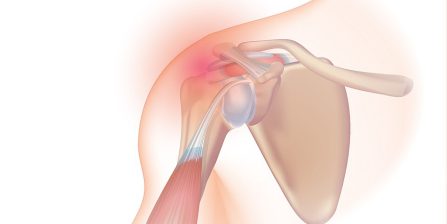
The rotator cuff is a group of four muscles and their tendons that hold the ball of the shoulder in its socket and help you lift and rotate your arm. A tear means one of these tendons has been damaged. A partial tear damages part of the tendon, while a full-thickness tear goes right through it. Tears can follow a sudden injury, such as a fall, or develop gradually from wear and repeated overhead use.
Rotator cuff tears are common and become more frequent with age, and some cause few or no symptoms1. When symptoms do appear, they often include:
- pain at the front or side of the shoulder, often worse at night or when lying on that side
- weakness or difficulty lifting the arm, for example to reach a shelf or brush your hair
- pain when raising the arm overhead or reaching behind your back
- a catching or clicking feeling, or a shoulder that feels tired and heavy
A tear is closely related to tendon wear and irritation. Our rotator cuff injury treatment page explains the wider group of rotator cuff problems, and our shoulder pain page gives an overview of the shoulder conditions we assess.
Can a rotator cuff tear be treated without surgery?
Many rotator cuff tears can be managed without surgery, especially partial tears. Treatment usually combines pain relief, guided shoulder exercises and, where suitable, ultrasound-guided injections. The right plan depends on the size of the tear, your symptoms and your scan, so we recommend an assessment first.
Studies of people with rotator cuff tears show that a structured exercise programme can bring meaningful improvement for many patients, and that comparisons of exercise-based care with surgery in selected patients have found improvement with both approaches2,3. What suits you depends on your own findings, which is why we look at the whole picture rather than the scan alone. Results vary between patients and no outcome can be guaranteed.
What non-surgical treatments do we offer for a rotator cuff tear?
We start by finding the cause, with your history, an examination and a review of your scan. Treatment may include medication, physiotherapy and rehabilitation, and ultrasound-guided injections where suitable. Your plan is tailored to your assessment rather than the scan alone.
Depending on your assessment, your plan may include:
- Medication and activity advice to settle pain, help you sleep and keep the shoulder moving within comfortable limits
- Physiotherapy and guided exercise to strengthen the muscles around the shoulder and restore movement, which is central to recovery for most people
- Ultrasound-guided injections, where suitable, placed with image guidance so that treatment is directed to the area causing pain (see our shoulder joint injections page)
- Coordination with other specialists and physiotherapists when your assessment shows another professional would help
Scans help, but they do not always explain pain. Many people have tendon changes on a scan that are common with age and cause no symptoms, so we match what the scan shows with your history and examination before recommending anything. We explain what we find in plain language and agree the next steps with you. Not everyone needs an injection, and the order of treatment depends on your findings.
See our pain management page for the full range of options we offer, and our shoulder hydrodilatation page for another shoulder procedure we provide. For related reading, see our guides to shoulder impingement and frozen shoulder symptoms and stages.
When should I get my shoulder assessed?
Shoulder pain that is not settling is worth having looked at, rather than waiting for it to pass. We find the cause first, then recommend a plan suited to you. Consider booking an assessment with us if:
- shoulder pain has not settled with rest or simple medication
- pain wakes you at night or stops you lying on that side
- you notice weakness, or find it hard to lift your arm
- pain began after a fall or injury
- the pain is limiting your work, exercise or daily activities
You do not need a GP referral to see us. We examine your shoulder, review any scan you already have, explain what we find and advise on the next steps with you.
What should I bring to my first visit?
- A short history of your shoulder pain: when it started, whether there was an injury, what makes it better or worse, and how it affects daily life
- Any MRI or ultrasound reports and images, and previous treatment records
- A list of your current medication
FAQs
Do I need a GP referral to see a pain specialist?
No. You can book directly with Alleviate Pain Clinic without a GP referral.
Do I need a scan before I come in?
Not necessarily. A review of any scan you already have is part of your assessment, and we advise on whether further imaging is needed after we have examined you.
How do I book a consultation?
Call or WhatsApp us on +65 8655 5722 or email enquiry@alleviatepain.com.sg. Our team will help you arrange a visit.
References
1. Yamamoto A, Takagishi K, Osawa T, et al. Prevalence and risk factors of a rotator cuff tear in the general population. J Shoulder Elbow Surg 2010;19(1):116-120. DOI: 10.1016/j.jse.2009.04.006
2. Kuhn JE, Dunn WR, Sanders R, et al. Effectiveness of physical therapy in treating atraumatic full-thickness rotator cuff tears: a multicenter prospective cohort study. J Shoulder Elbow Surg 2013;22(10):1371-1379. DOI: 10.1016/j.jse.2013.01.026
3. Moosmayer S, Lund G, Seljom US, et al. Tendon repair compared with physiotherapy in the treatment of rotator cuff tears: a randomized controlled study in 103 cases with a five-year follow-up. J Bone Joint Surg Am 2014;96(18):1504-1514. DOI: 10.2106/JBJS.M.01393
This article is general patient education and does not replace a medical assessment. To discuss your shoulder pain, see our pain management clinic in Singapore.