
If your shoulder has become painful and stiff, and you can no longer reach behind your back or lift your arm to comb your hair, you may have a frozen shoulder (the medical name is adhesive capsulitis). It is common, it is frustrating, and it does usually improve. Gentle, regular movement is a big part of getting better. It is best to have the shoulder assessed by a doctor first, because shoulder pain has several possible causes, and a wrong diagnosis can lead to the wrong treatment. This guide covers five recommended exercises, how often to do them, and when it is time to get help.
In short: the mainstay of physiotherapy for frozen shoulder is gentle stretching and movement exercises, done often: 10 to 20 repetitions, 3 times a day. Treatments such as therapeutic ultrasound and laser are unlikely to be useful.
How long does a frozen shoulder last?
It varies. Pain and stiffness can last up to two to three years before settling, and many people improve sooner. Keeping the shoulder moving helps.
Five exercises to do at home
All five exercises are recommended, with 10 to 20 repetitions of each in a session, and 3 sessions a day. Doing them often is what matters: exercising once a week is not enough to make a difference. Move gently and stop if you get sharp pain.
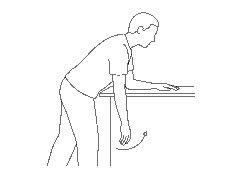
1. Pendulum swing
Lean forward and support yourself with your good hand on a table. Let the sore arm hang down, then swing it gently forwards and back, side to side, and in small circles.
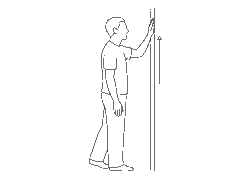
2. Wall climbing
Stand facing a wall. Walk the fingers of your sore arm up the wall as high as is comfortable, then walk them back down.
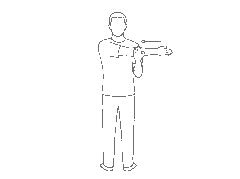
3. Cross-body stretch
Stand upright and bring the sore arm across your chest. Use your good hand to hold the sore arm just above the elbow and gently pull it across your chest as far as is comfortable, without pain, until you feel a stretch.
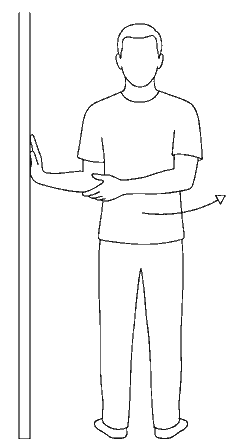
4. Doorway stretch
Stand beside a door frame with the sore elbow bent to 90 degrees and tucked in at your side, with your forearm and hand against the frame. Hold the sore elbow with your other hand, then slowly turn your body away from the frame until you feel a gentle stretch.
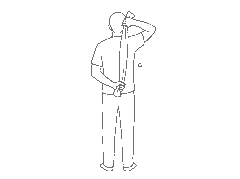
5. Towel stretch
Hold a towel behind your back, with your good arm over the shoulder, and gently pull the sore arm upwards.
Treatments unlikely to be useful
You may come across therapeutic ultrasound, low-level laser or light therapy, pulsed electromagnetic field therapy, and TENS in the treatment of a frozen shoulder. These are unlikely to be useful, because the research supporting them is weak, and are therefore not routinely recommended.
How hard should you exercise?
Move gently and avoid movements that cause pain. Strenuous exercise or gym equipment can make the pain worse. A good rule is to feel a gentle stretch, not sharp pain.
Some people find a warm pack helpful before stretching. A heat pack or hot water bottle wrapped in a towel, for up to 20 minutes at a time, is enough. Take care not to burn the skin.
When to stop and see a doctor
Stop an exercise if it causes sharp pain. See a doctor if the pain and stiffness are not going away, or if pain makes it hard to move your arm and shoulder. A doctor should confirm the diagnosis, ideally before starting the exercises, as a frozen shoulder can be mistaken for other shoulder problems, and a misdiagnosis can lead to the wrong treatment.
When exercises aren’t enough
Some people find that exercises alone do not help enough, or that the pain is too sharp to do the stretches at all. If you have been doing gentle exercises for several weeks without improvement, or night pain is stopping you from sleeping, we recommend that you visit a pain specialist. At Alleviate Pain Clinic, Dr Christopher Liu assesses your shoulder and talks through the treatment options that may suit you, such as shoulder hydrodilatation and manipulation under anaesthesia. You can read more on the clinic’s Frozen Shoulder page, or contact the clinic to book an appointment.
Common questions
Does physiotherapy help frozen shoulder? Gentle, regular movement is a big part of getting better. What matters most is doing the exercises often, with 10 to 20 repetitions of each in a session and 3 sessions a day.
Should I exercise if my shoulder hurts? Move gently and stop if you get sharp pain. A good rule is to feel a gentle stretch, not sharp pain. Strenuous exercise or gym equipment can make the pain worse.
Is ultrasound or laser therapy useful for frozen shoulder? These are unlikely to be useful, because the research supporting them is weak, and they are therefore not routinely recommended.
When should I see a pain specialist? If you have been doing gentle exercises for several weeks without improvement, or night pain is stopping you from sleeping, we recommend that you visit a pain specialist. See also our page on shoulder pain.
References
- Page MJ, Green S, Kramer S, et al. Manual therapy and exercise for adhesive capsulitis (frozen shoulder). Cochrane Database of Systematic Reviews. 2014;(8):CD011275. cochrane.org
- Page MJ, Green S, Kramer S, et al. Electrotherapy modalities for adhesive capsulitis (frozen shoulder). Cochrane Database of Systematic Reviews. 2014;(10):CD011324. cochrane.org
- Page MJ, Green S, Mrocki MA, et al. Electrotherapy modalities for rotator cuff disease. Cochrane Database of Systematic Reviews. 2016;(6):CD012225. cochrane.org
This article is general information and is not a substitute for medical advice.