
Headaches and facial pain

Cervicogenic headache in Singapore: symptoms, causes and treatment

Headache at the back of your head that gets worse when you move your neck? It may be cervicogenic headache, where pain from the neck is felt in the head. A pain specialist in Singapore can find the source and treat it.

At a glance

Common signsHeadache at the back of the head, often with neck pain or stiffness, that gets worse with neck movement or certain neck positions.
See a specialist ifHeadaches keep coming back, painkillers are not helping, or neck movement sets them off.
What may helpFinding the neck structure behind the headache, exercise and physiotherapy and, for suitable patients, nerve blocks and radiofrequency treatment.
Our roleDr Liu is a pain physician. We look for the source of your headache and treat it with minimally invasive options.
Visit usFarrer Park Hospital (Connexion), Singapore. Mon–Fri 9am–5pm, Sat 9am–1pm, by appointment.
Written and reviewed by Dr Christopher Liu, Pain PhysicianLast reviewed: 9 November 2026About Dr Liu

What is cervicogenic headache?

Cervicogenic headache is a headache that arises from structures in the cervical spine (the neck). Pain signals from the upper neck are felt at the back of the head, and sometimes at the front of the head too.1

It is a secondary headache, meaning it comes from another structure, unlike migraine, which is a primary headache. “Cervicogenic headache” is an umbrella term. The pain can come from the bones, discs, facet joints, ligaments or muscles of the neck, so it does not feel the same for everyone. Finding which structure is the source is the key to treating it.2

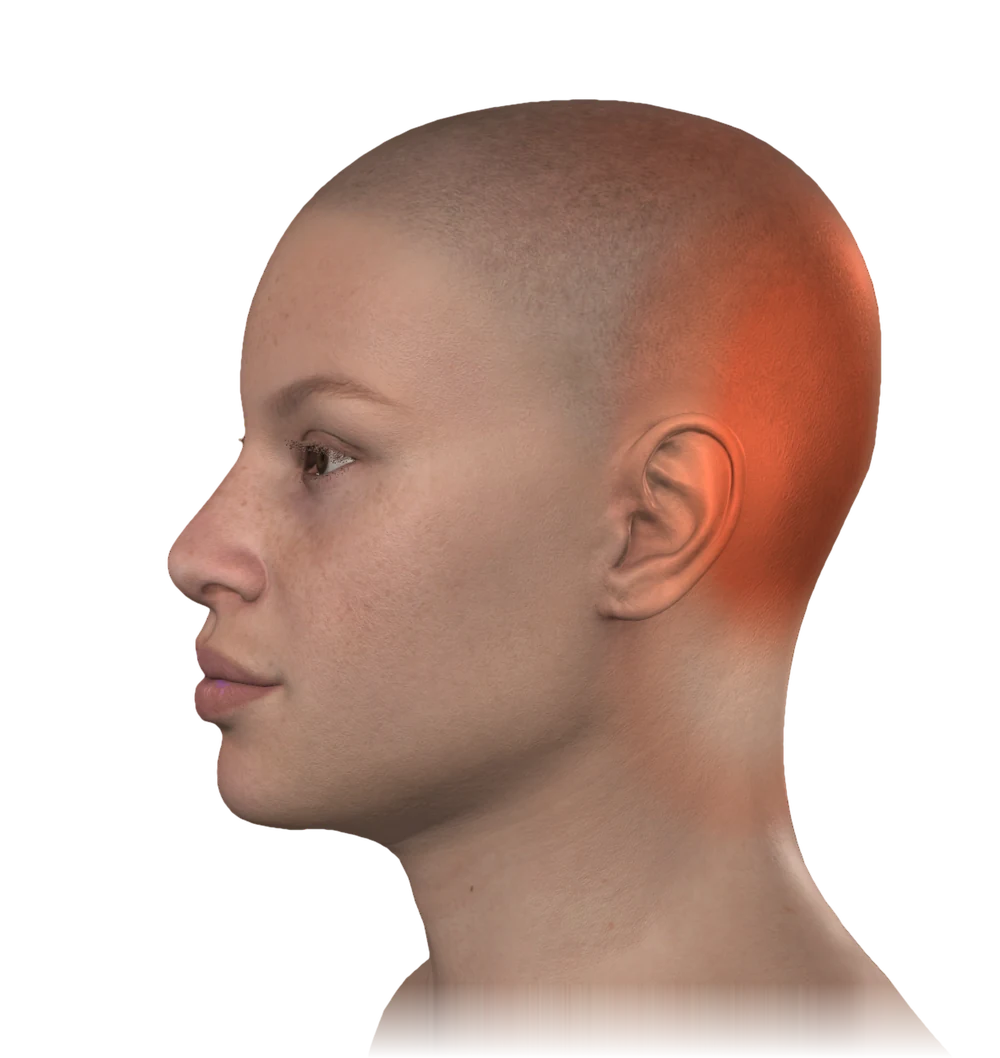
Side view of a head and neck with the back of the head and upper neck shaded, and a lighter shade towards the top of the head, showing where cervicogenic headache is usually felt
The shaded area shows where cervicogenic headache is usually felt: the back of the head and the upper neck. It can sometimes spread towards the top of the head (the vertex) and the front.

What causes cervicogenic headache?

Any of the structures in the upper neck can be the source of the pain, including:

  • the facet joints, the small joints at the back of the spine
  • the discs between the bones of the neck
  • the bones and ligaments of the neck
  • the muscles of the neck

It can follow a neck injury such as whiplash, although not always. Often it is not one single cause, and a careful assessment is needed to find the main source.2

Symptoms of cervicogenic headache

Typical features include:

  • a headache at the back of the head, which can spread to the front of the head
  • headache that is brought on or made worse by neck movement or certain neck positions1
  • neck pain or stiffness, although not everyone has it
  • a history of a neck injury such as whiplash, in some people

How is cervicogenic headache different from migraine?

The two can feel quite different, although some features overlap.1

  • Migraine is usually a throbbing headache, more likely to be felt at the front of the head, and often comes with sensitivity to light and sound and nausea.
  • Cervicogenic headache tends to be felt at the back of the head, although it can spread to the front. It is made worse by moving the neck, which is not typical of migraine, and it may follow a neck injury such as whiplash.

Because the features can overlap, an assessment is the best way to tell which one you have. Read more about migraines.

When should you see a pain specialist?

A new headache, or a change in the pattern of your usual headaches, should be checked by a doctor first.

It is a good idea to see a pain specialist if your headaches are at the back of the head and keep coming back, if neck movement sets them off, if painkillers are not working or you need them often (frequent use can itself bring on headaches), or if they are affecting your work, sleep or family life.

How is cervicogenic headache diagnosed?

Diagnosis starts with your story and an examination of your neck, including how neck movement affects your headache. A headache at the back of the head that is made worse by neck movement suggests that it may be cervicogenic.1

Scans can show changes in the neck, but similar changes are common in people who do not have headaches, so they are used mainly to rule out other problems.1

If the facet joints are thought to be the source, a diagnostic nerve block (medial branch block) can help to confirm it. Local anaesthetic is placed next to the small nerves that supply the joints. If your headache clearly eases while the joints are numb, they are likely to be the source.2 Read more about facet joint injections and medial branch blocks.

How is cervicogenic headache treated?

Treatment depends on the source of the pain and how long you have had the headache. Options fall into three groups:

  • Conservative treatment includes pain relief as advised by your doctor, physiotherapy and exercise for the neck, and adjusting the activities that set the headache off.
  • Interventional treatment is used for suitable patients. We offer occipital nerve blocks, medial branch blocks and radiofrequency ablation.
  • Surgery is considered rarely, for a small number of people whose headache comes from a structural problem in the neck.

An occipital nerve block places local anaesthetic near the nerves at the back of the head and can ease the pain for a time. Dr Liu will explain which options suit you.

Radiofrequency ablation for the neck joints

If a diagnostic block shows that a facet joint is the source of your headache, radiofrequency ablation may be an option. A needle is placed next to the small nerves that carry pain signals from the joint, and heat is used to reduce those signals. The relief can last for several months, and the treatment can be repeated if the pain returns.3

Read more about facet joint radiofrequency treatment.

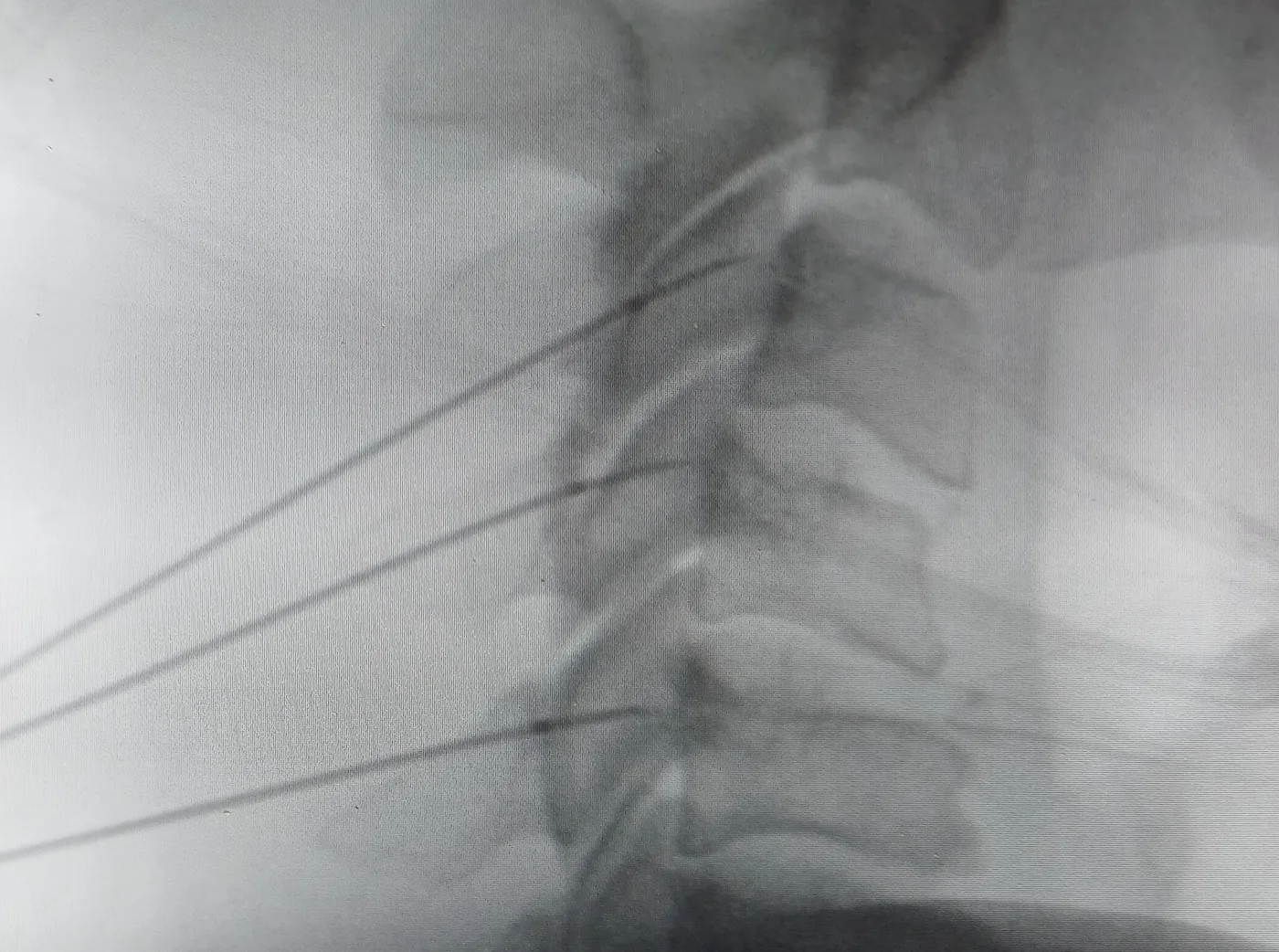
X-ray image of the neck from the side, with needles positioned beside the cervical facet joints during radiofrequency ablation
X-ray (fluoroscopy) image taken during a cervical facet radiofrequency procedure. The needles are placed next to the nerves that supply the facet joints.

What to expect at your visit

At your consultation at our clinic in Farrer Park Hospital, Singapore, Dr Liu will ask about your headaches, your neck, any past neck injury and previous treatment, examine your neck and explain what he finds. If a nerve block or radiofrequency treatment is suitable, he will explain how it is done, what to expect afterwards, the possible risks and the cost, so that you can decide.

How well you respond depends on the cause of the headache and how long you have had it. In our experience, early treatment often gives better results.

Looking after your neck

  • Keep moving your neck gently within a comfortable range. Avoid keeping it completely still.
  • Set up your workstation: screen at eye level, feet supported, and a short break from sitting every 30 to 45 minutes.
  • Raise your phone towards eye level instead of looking down for long periods.
  • Choose a supportive pillow that keeps your neck in a neutral position when you sleep.
  • Do your exercises regularly. Short, frequent sessions are usually better than occasional long ones.
  • Make time to relax. Stress often tightens the neck and shoulder muscles.
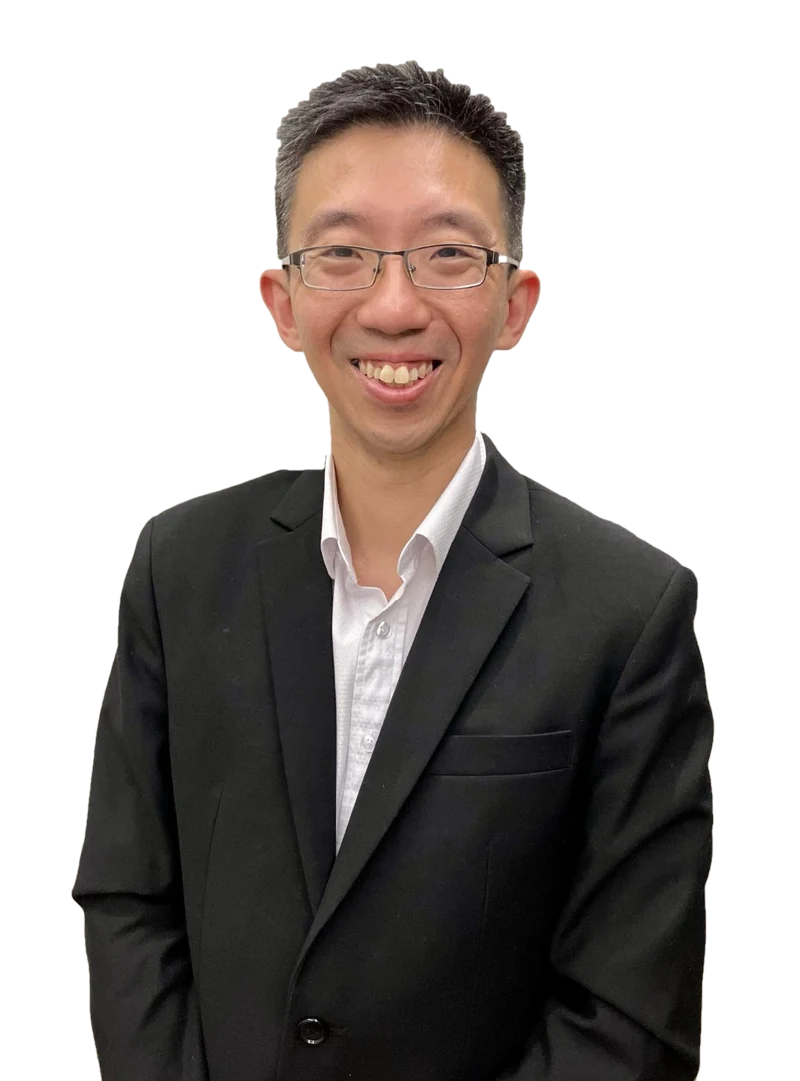
Dr Christopher Liu, pain physician at Alleviate Pain Clinic

Dr Christopher Liu, Pain Physician

MOH accredited Pain Specialist and Medical Director of Alleviate Pain Clinic at Farrer Park Hospital. He completed an interventional pain fellowship at the University Health Network in Toronto and was previously a Senior Consultant in Pain Medicine at Singapore General Hospital.

Read more about Dr Liu

References

  1. Headache Classification Committee of the International Headache Society (IHS). The International Classification of Headache Disorders, 3rd edition. Cephalalgia. 2018;38(1):1–211. ICHD-3, section 11.2.1
  2. Bogduk N, Govind J. Cervicogenic headache: an assessment of the evidence on clinical diagnosis, invasive tests, and treatment. Lancet Neurology. 2009;8(10):959–968. doi:10.1016/S1474-4422(09)70209-1
  3. Govind J, King W, Bailey B, Bogduk N. Radiofrequency neurotomy for the treatment of third occipital headache. Journal of Neurology, Neurosurgery & Psychiatry. 2003;74(1):88–93. doi:10.1136/jnnp.74.1.88

This page gives general information and is not a substitute for medical advice. Please see a doctor about your own symptoms and treatment options.

Common questions

What is cervicogenic headache?

Cervicogenic headache is a headache that arises from structures in the cervical spine (the neck), such as the facet joints, discs, ligaments and muscles. It is a secondary headache, which distinguishes it from migraine, a primary headache that is not caused by another structure.

How is cervicogenic headache different from migraine?

Migraine is usually a throbbing headache, more likely at the front of the head, with sensitivity to light and sound and nausea. Cervicogenic headache tends to be felt at the back of the head and is made worse by neck movement. Some features overlap, so an assessment helps to tell them apart.

How is cervicogenic headache diagnosed?

Diagnosis starts with your story and an examination of your neck. If the facet joints are thought to be the source, a diagnostic nerve block (medial branch block) can help to confirm it. Scans are used mainly to rule out other problems.

What treatments are available for cervicogenic headache?

Treatment can be conservative, interventional or, rarely, surgical. Conservative treatment includes pain relief, physiotherapy and exercise. For suitable patients we offer occipital nerve blocks, medial branch blocks and radiofrequency ablation.

Can radiofrequency ablation help cervicogenic headache?

If a diagnostic block shows that a facet joint is the source of the headache, radiofrequency ablation of the nerves supplying that joint may be an option. The relief can last for several months.

How long does cervicogenic headache last?

It depends on the cause and how long you have had the headache. In our experience, early treatment often gives better results.

Does insurance cover interventional pain treatments in Singapore?

Interventional pain procedures are covered by the Ministry of Health's Table of Surgical Procedures (TOSP). They are therefore usually claimable under Integrated Shield Plans and most corporate insurance plans, subject to your plan's terms. However, it is advisable to obtain preauthorisation from your insurer before the procedure. Our clinic staff will guide you through this process.

Ready to talk about your pain?

Book a consultation, or call us on 8655 5722.
Go To Top