Frozen shoulder, also called adhesive capsulitis, usually starts quietly. The shoulder begins to ache, then slowly gets stiffer until reaching for a shelf or fastening a bra becomes difficult. Here is what the symptoms look like, how the condition moves through its stages, and when it is worth seeing a specialist.
What are the symptoms of frozen shoulder?
The most common features are:
- Shoulder pain that comes on gradually, often deep and aching, and often worse at night
- Stiffness that makes it hard to reach overhead, behind your back or out to the side
- Difficulty with everyday tasks such as dressing, washing your hair or fastening a bra
- Trouble sleeping on the affected side
The key sign is that the whole shoulder becomes stiff. It moves less in every direction, both when you move it yourself and when someone else moves it for you.
The three stages of frozen shoulder
Frozen shoulder usually moves through three overlapping stages. The time frames are typical ranges, and every person is different.
1. Freezing (painful) stage. Pain builds gradually, often worse at night, and the shoulder starts to lose movement. This commonly lasts about 2 to 9 months.
2. Frozen (stiff) stage. Pain may ease a little, but stiffness is at its worst. Reaching, dressing and sleeping can be difficult. This often lasts about 4 to 12 months.
3. Thawing (recovery) stage. Movement slowly returns. This can take about 5 to 24 months.
In total, frozen shoulder can last up to about 36 months (3 years), although many people recover sooner, especially with treatment. The stages overlap, so it can be hard to tell which one you are in.
Is it frozen shoulder or a rotator cuff problem?
In frozen shoulder, the joint itself is stiff, so movement is limited even when someone else lifts your arm. Rotator cuff problems more often cause pain and weakness when you lift your arm, but the joint usually still moves freely. The two can occur together, so an examination is the best way to tell them apart. Read more about why your shoulder may hurt when you lift your arm.
Who is more likely to get it?
Frozen shoulder is most common between the ages of 40 and 70 and is more common in women. You are also more likely to develop it if you have diabetes or prediabetes, thyroid problems, have had a shoulder injury or surgery, or have kept your shoulder still for a long time, for example in a sling. See our articles on diabetes and frozen shoulder and frozen shoulder during menopause.
When should you see a pain specialist?
Consider an assessment if:
- Shoulder pain and stiffness have lasted more than a few weeks
- Pain at night is stopping you from sleeping
- You can no longer do everyday tasks or work comfortably
- You have diabetes and your shoulder has become stiff and painful
- Rest, simple pain relief and gentle movement have not settled it
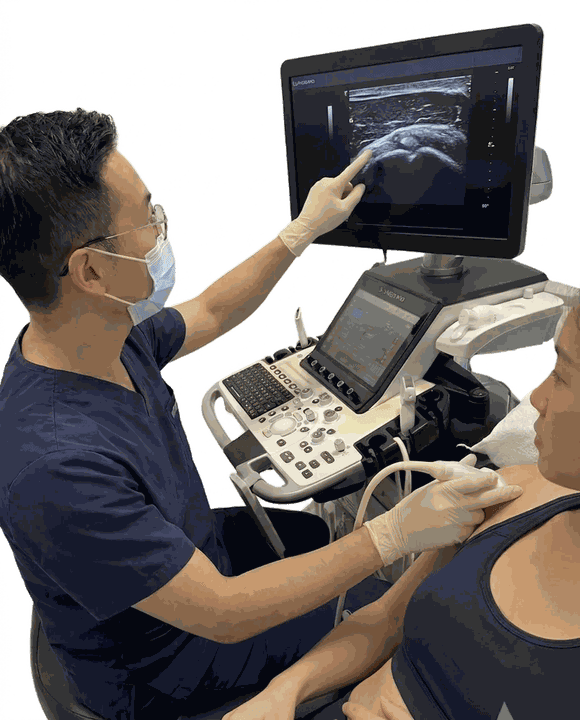
Frozen shoulder is usually diagnosed from your history and a physical examination. Scans are not usually needed to confirm it, but an X-ray or ultrasound may be used to rule out other problems.

What can help?
Options include pain relief, gentle exercise and physiotherapy, a corticosteroid injection, and shoulder hydrodilatation, where fluid is injected into the joint to stretch the tight capsule. For everyday advice, read our dos and don’ts for a frozen shoulder and 5 exercises you can do at home.
Good news: most people recover without ever needing surgery.
For a full guide to causes, diagnosis and treatment, see our frozen shoulder treatment in Singapore page.
Common questions
Does frozen shoulder go away on its own? Often, but it can take a long time and be painful and disruptive meanwhile. Many people choose treatment to ease pain, improve sleep and keep movement while the shoulder recovers.
Can it affect both shoulders? It can. Having had frozen shoulder in one shoulder makes it more likely in the other, and it can come back, especially in people with diabetes.
How long does frozen shoulder last? Up to about 36 months without treatment, with many people recovering sooner.
Book a consultation at Alleviate Pain Clinic, Farrer Park Hospital, or call 8655 5722.
This article gives general information and is not a substitute for medical advice.