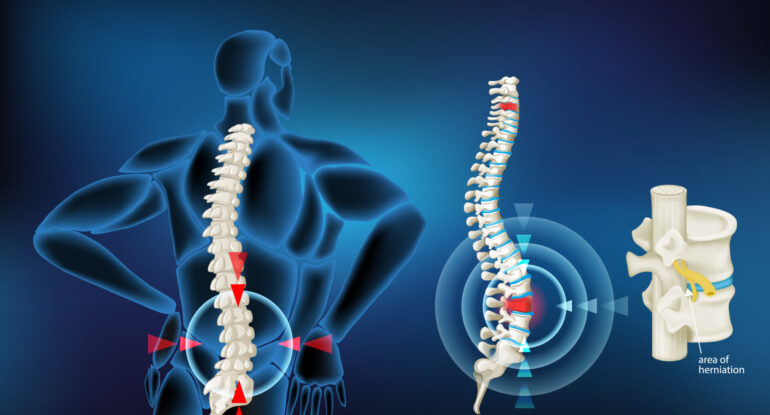
Back pain and neck pain are often attributed to a “slipped disc.” But what does this term actually mean? Understanding the difference between a slipped disc (also known as a herniated disc) vs a bulging disc can help you identify your symptoms and seek appropriate care. In this article, we explore the anatomy of the intervertebral disc and explain these common spinal conditions.
Understanding Intervertebral Disc Anatomy
The spine is a column of bones called vertebrae that supports your body and protects the spinal cord. Between each vertebral bone sits an intervertebral disc, hence the name. These discs serve as shock absorbers, allowing your spine to move freely.
Each intervertebral disc consists of two main parts: a gel-like centre called the nucleus pulposus and a tough outer ring known as the annulus fibrosus. When the annulus fibrosus weakens, the disc may extend beyond the margins of the vertebral bones without tearing. This is called a bulging disc. However, if the outer layers tear and the nucleus pulposus pushes through, the condition is known as a slipped disc.
Bulging Disc vs Slipped Disc: Key Differences
Although both conditions involve the intervertebral disc, they differ in how they develop and the symptoms they cause.
Bulging Disc
A bulging disc is primarily a degenerative condition that becomes increasingly common with age. Many patients experience no symptoms unless the bulge becomes severe enough to compress the nerves located behind the discs. When symptoms do occur, patients typically notice back and leg pain gradually worsening.
Slipped Disc (Herniated Disc)
In contrast, the symptoms of a slipped disc in the back tend to be more pronounced due to direct nerve irritation. Patients often experience sharper pain, sudden onset of symptoms, and nerve-related issues such as numbness, tingling, and muscle weakness.
Will a Slipped Disc or Bulging DiscHeal on Its Own?
One of the most common questions patients ask is whether these conditions will improve without surgery. The answer depends on the type and severity of your disc problem.
For a bulging disc, the outlook is generally positive. While the disc itself won’t return to its original shape, most patients find their symptoms ease considerably with consistent physiotherapy, lifestyle adjustments, and proper posture habits. The goal is long-term management rather than a complete “cure.”
A slipped disc often has an even more encouraging prognosis. In most cases, symptoms improve within six to twelve weeks as the body gradually reabsorbs the leaked disc material, easing pressure on the surrounding nerves.
Signs You Should Not Ignore
If you experience pain radiating into your arms or legs, or if you notice numbness, tingling, or muscle weakness, this may indicate nerve compression or irritation. In these circumstances, it is important to seek medical attention promptly.
Seek urgent medical care if you experience loss of bladder or bowel control, severe or rapidly worsening weakness, intense pain following an accident or injury, or if you have a history of cancer.
Expert Slipped Disc Treatment in Singapore
If you are seeking effective slipped disc treatment in Singapore, specialist care is available to help you find relief.
Dr Christopher Liu is a back pain specialist in Singapore at Alleviate Pain Clinic. As a trusted pain clinic in Singapore, the team offers comprehensive spinal care through minimally invasive procedures, including Nucleoplasty, Annuloplasty, steroid injections, and Radiofrequency Ablation.
Experiencing persistent back or neck pain? Book a consultation today to explore your treatment options.