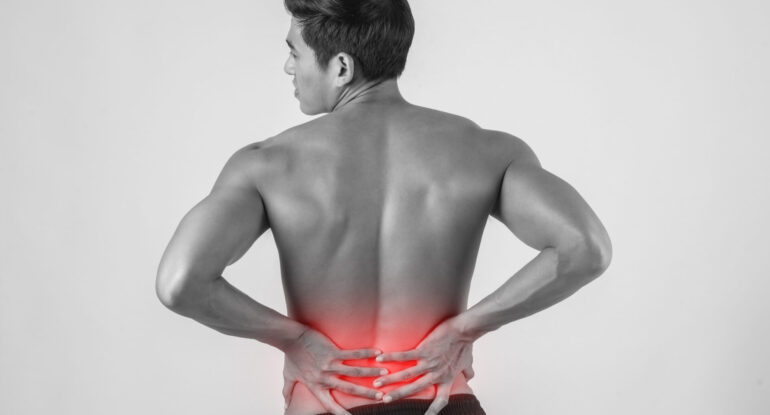
Back pain is a common problem, and in most cases, it resolves within a few days without any active intervention. However, the pain can sometimes persist, pointing to a more serious underlying cause. One such cause is an annular tear of the spinal disc, which is particularly relevant for active individuals, including athletes, lifters, runners, and active adults. Understanding this condition is the first step towards protecting your spine.
What Are Annular Tears?
The spine is made up of vertebral bones stacked on top of one another, separated by intervertebral discs that act as shock absorbers. Each disc has two components:
- Nucleus Pulposus: The soft, gel-like centre of the disc that helps distribute compressive forces
- Annulus Fibrosus: The tough, fibrous outer ring made up of layered collagen fibres that resists bending, twisting, and loading
An annular tear with disc bulge can occur when the annulus fibrosus is damaged, and the nucleus pulposus pushes through the tear, also known as a disc herniation or a prolapsed disc. This can compress or irritate nearby nerves, leading to leg pain. That said, not all annular tears cause symptoms. Imaging studies have shown that tears can be present even in patients with no pain.
Why Are Active People Vulnerable?
The annulus fibrosus becomes damaged when it is overloaded. Common causes include:
- Repetitive mechanical loading: Heavy lifting, particularly with spinal flexion under load, increases internal disc pressure significantly. Repeated cycles of bending and compressing, such as in weightlifting, can gradually weaken the annular fibres.
- Rotation under resistance: Sports such as golf, tennis, and certain martial arts transmit rotational forces through the lumbar spine. When these forces are not distributed through the hips and thoracic spine, stress concentrates in the annulus and can cause injury.
- Age and disc dehydration: As we age, the disc naturally loses hydration and elasticity, making it more susceptible to tears even with everyday activity.
What Does an Annular Tear Feel Like?
When symptomatic, an annular tear can cause:
- Deep, localised low back pain
- Pain that worsens with prolonged sitting or forward bending
- Pain that worsens with coughing or straining
- Radiating leg pain, if an associated disc herniation is present
Diagnosis is typically made clinically and confirmed through an MRI of the spine.
How Long Do Annular Tears Take to Heal?
This is one of the most common questions patients ask. It depends on the severity of the tear and the treatment approach. Mild tears may improve with conservative treatment over several weeks to a few months. More significant tears, particularly those associated with disc herniation, may take longer and may require further intervention.
First-line treatment is typically non-surgical, involving pain medications or an epidural steroid injection, followed by activity modification and physical therapy.
If conservative treatment is ineffective, minimally invasive procedures such as annuloplasty and nucleoplasty may be considered. In this outpatient procedure, a pain specialist inserts needles into the affected disc under X-ray guidance. A controlled radiofrequency energy is then applied to the affected area of the annulus to stabilise the tear and reduce pain transmission.
How to Prevent an Annular Tear
While not all annular tears can be prevented, the risk can be reduced through smart training and recovery habits:
- Prioritise movement quality over heavier loads, maintaining spinal neutrality during lifts
- Gradually increase training load to avoid sudden spikes in intensity
- Incorporate adequate rest and recovery into your exercise programme
- Stay well hydrated and get sufficient sleep to support disc health
Do Not Let a Tear Hold You Back
If you are struggling with persistent back pain, it is important not to ignore it. Early assessment and the right treatment plan can make a significant difference in your recovery and long-term spinal health.
Dr Christopher Liu is a pain specialist at Alleviate Pain Clinic with two decades of experience in minimally invasive spine procedures. For those considering nucleoplasty and annuloplasty spine treatment in Singapore, Dr Liu offers a comprehensive and personalised approach to care.
Stop pushing through the pain. Get the right diagnosis and treatment today.